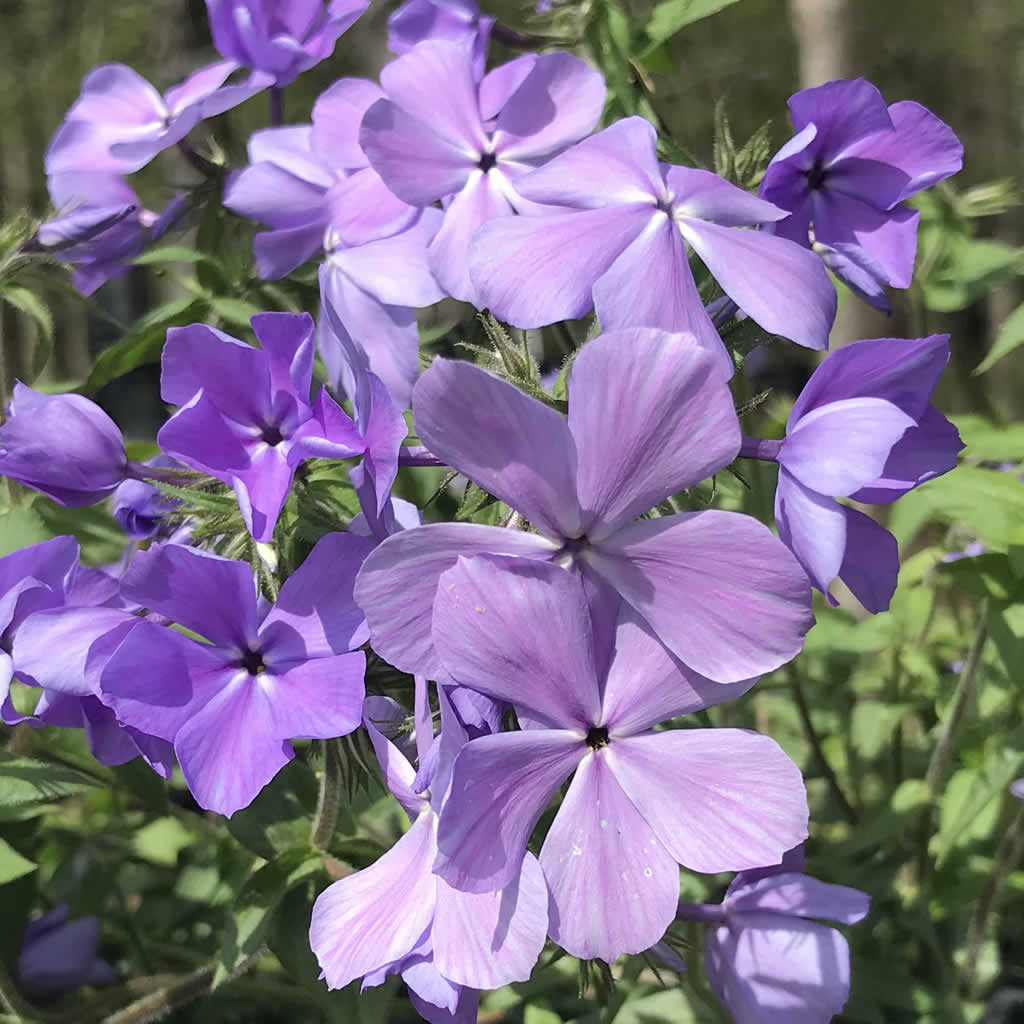
Blue Moon Woodland Phlox
With its rich violet-blue flowers, woodland Phlox is a top choice for the shade garden and looks especially pleasing when interplanted with other spring flowering shade plants.
- Compact growing habit
- Easy to grow
- Fragrant flowers
Details
- 12 to 18 inches tall and 24 to 36 inches wide
- Semi-evergreen and creates a ground-hugging habit
- Hardy in USDA hardiness zones 4, 5, 6, 7, and 8
Flowering period
In central North Carolina, flowering begins in April and continues for about three weeks.
How to grow
Woodland Phlox grows best in rich, moist soil with good drainage. Plants prefer high shade or morning sun and afternoon shade to promote lots of flowers.
Care and maintenance
Plants can be trimmed back after flowering in spring to tidy them up.
Where to plant
Woodland gardens where it can be used along paths and to edge borders.
When to plant
Anytime the ground isn’t frozen.
Spacing
12 to 18 inches apart when planting in groups.
When will my plant flower?
Plants purchased and planted in late winter or early spring will flower in their first season.
Native habitat and range
Moist, deciduous forests throughout most of the eastern United States.
Source and origin
Plants are grown from cuttings here at the nursery, and the original plant was discovered by the New England Wildflower Society.
With its rich violet-blue flowers, woodland Phlox is a top choice for the shade garden and looks especially pleasing when interplanted with other spring flowering shade plants.
- Compact growing habit
- Easy to grow
- Fragrant flowers
Details
- 12 to 18 inches tall and 24 to 36 inches wide
- Semi-evergreen and creates a ground-hugging habit
- Hardy in USDA hardiness zones 4, 5, 6, 7, and 8
Flowering period
In central North Carolina, flowering begins in April and continues for about three weeks.
How to grow
Woodland Phlox grows best in rich, moist soil with good drainage. Plants prefer high shade or morning sun and afternoon shade to promote lots of flowers.
Care and maintenance
Plants can be trimmed back after flowering in spring to tidy them up.
Where to plant
Woodland gardens where it can be used along paths and to edge borders.
When to plant
Anytime the ground isn’t frozen.
Spacing
12 to 18 inches apart when planting in groups.
When will my plant flower?
Plants purchased and planted in late winter or early spring will flower in their first season.
Native habitat and range
Moist, deciduous forests throughout most of the eastern United States.
Source and origin
Plants are grown from cuttings here at the nursery, and the original plant was discovered by the New England Wildflower Society.
Original: $15.00
-70%$15.00
$4.50Description
With its rich violet-blue flowers, woodland Phlox is a top choice for the shade garden and looks especially pleasing when interplanted with other spring flowering shade plants.
- Compact growing habit
- Easy to grow
- Fragrant flowers
Details
- 12 to 18 inches tall and 24 to 36 inches wide
- Semi-evergreen and creates a ground-hugging habit
- Hardy in USDA hardiness zones 4, 5, 6, 7, and 8
Flowering period
In central North Carolina, flowering begins in April and continues for about three weeks.
How to grow
Woodland Phlox grows best in rich, moist soil with good drainage. Plants prefer high shade or morning sun and afternoon shade to promote lots of flowers.
Care and maintenance
Plants can be trimmed back after flowering in spring to tidy them up.
Where to plant
Woodland gardens where it can be used along paths and to edge borders.
When to plant
Anytime the ground isn’t frozen.
Spacing
12 to 18 inches apart when planting in groups.
When will my plant flower?
Plants purchased and planted in late winter or early spring will flower in their first season.
Native habitat and range
Moist, deciduous forests throughout most of the eastern United States.
Source and origin
Plants are grown from cuttings here at the nursery, and the original plant was discovered by the New England Wildflower Society.