Tangerine Beauty Crossvine
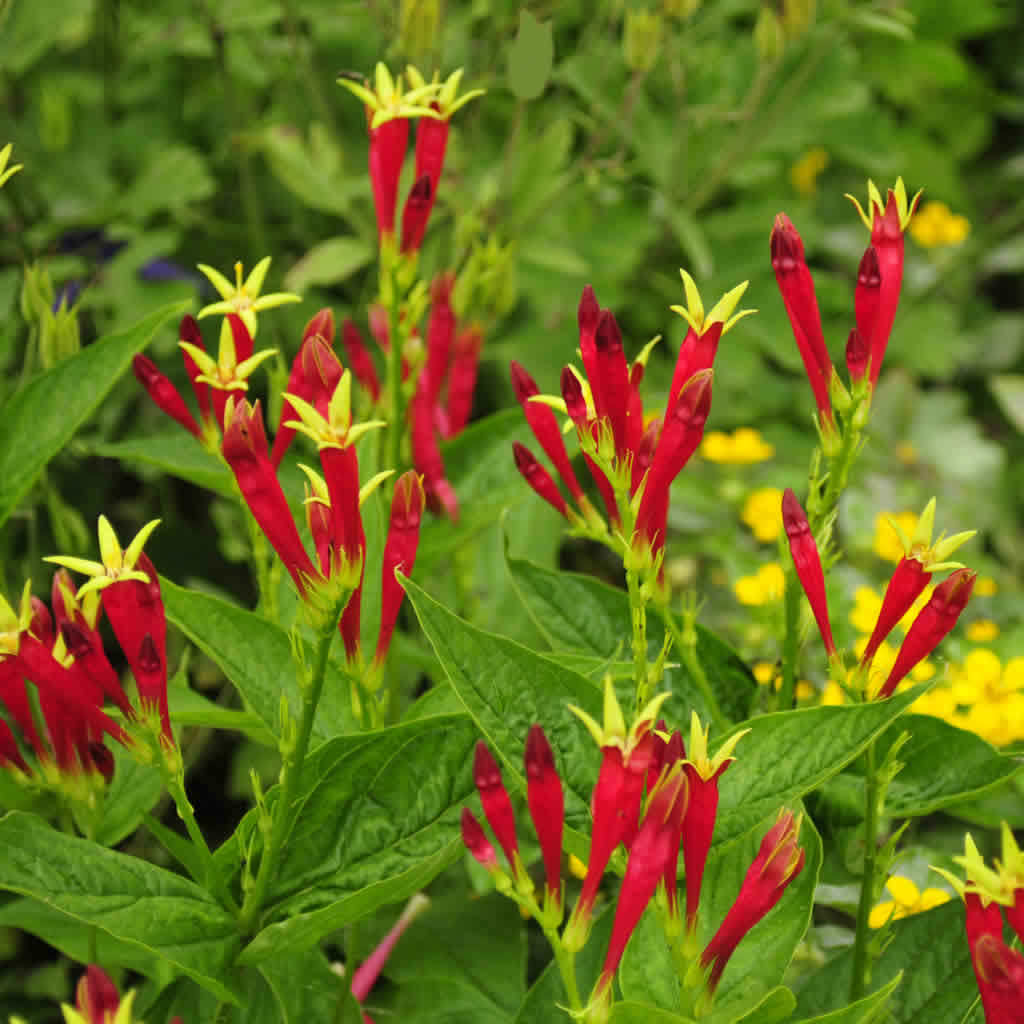
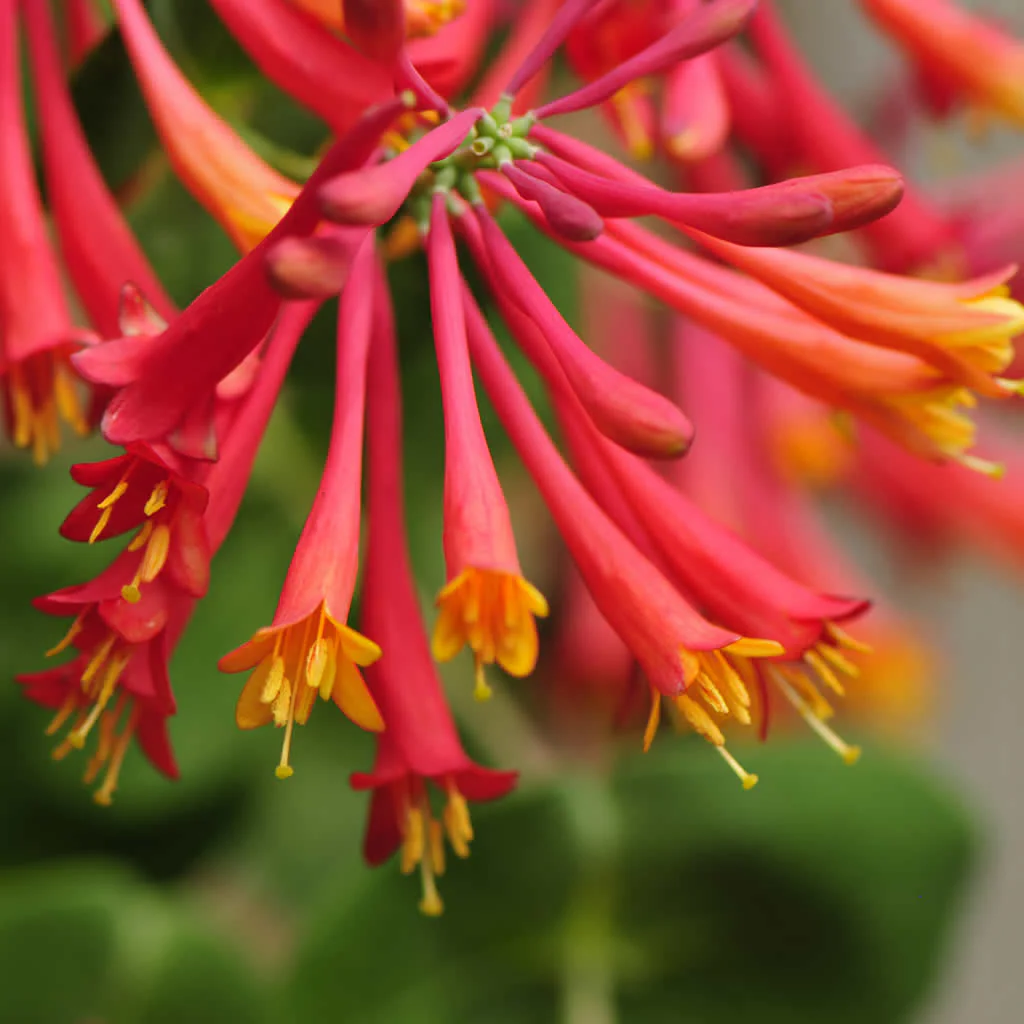
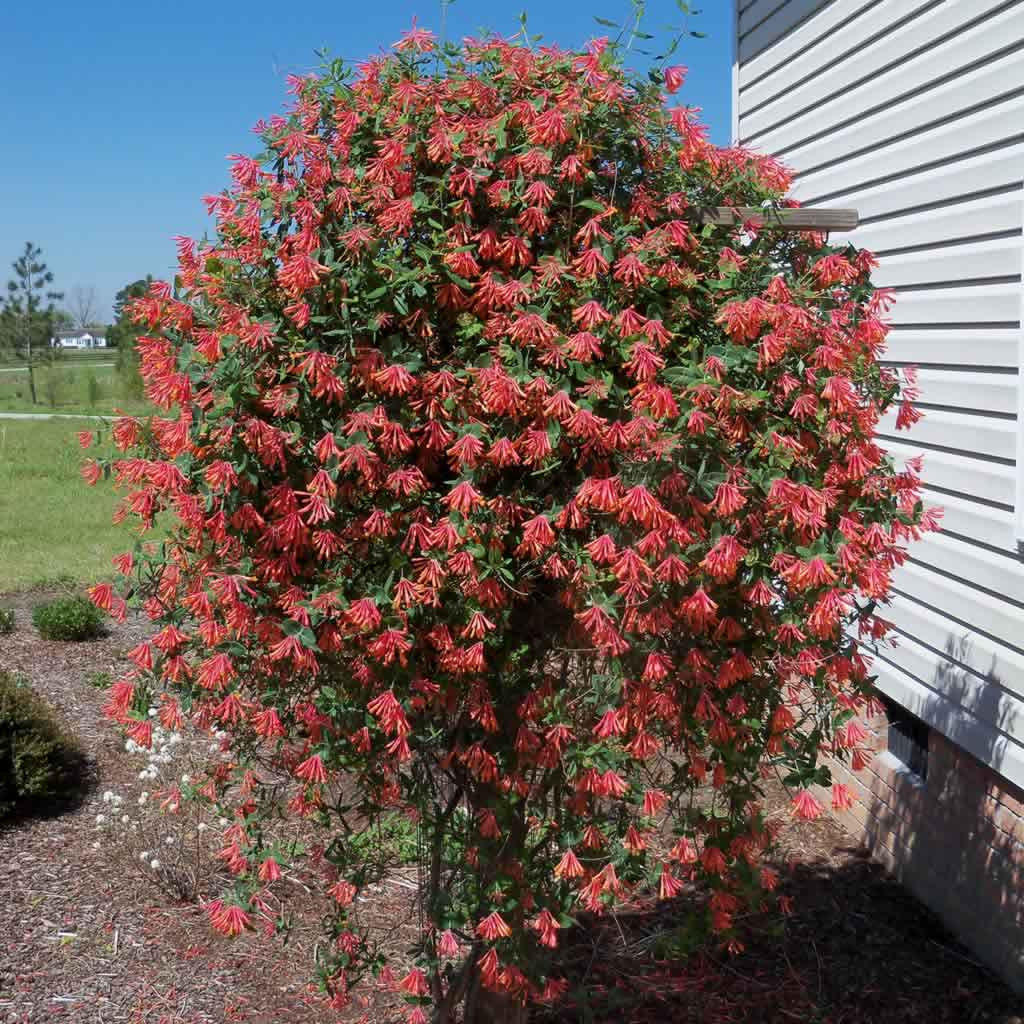
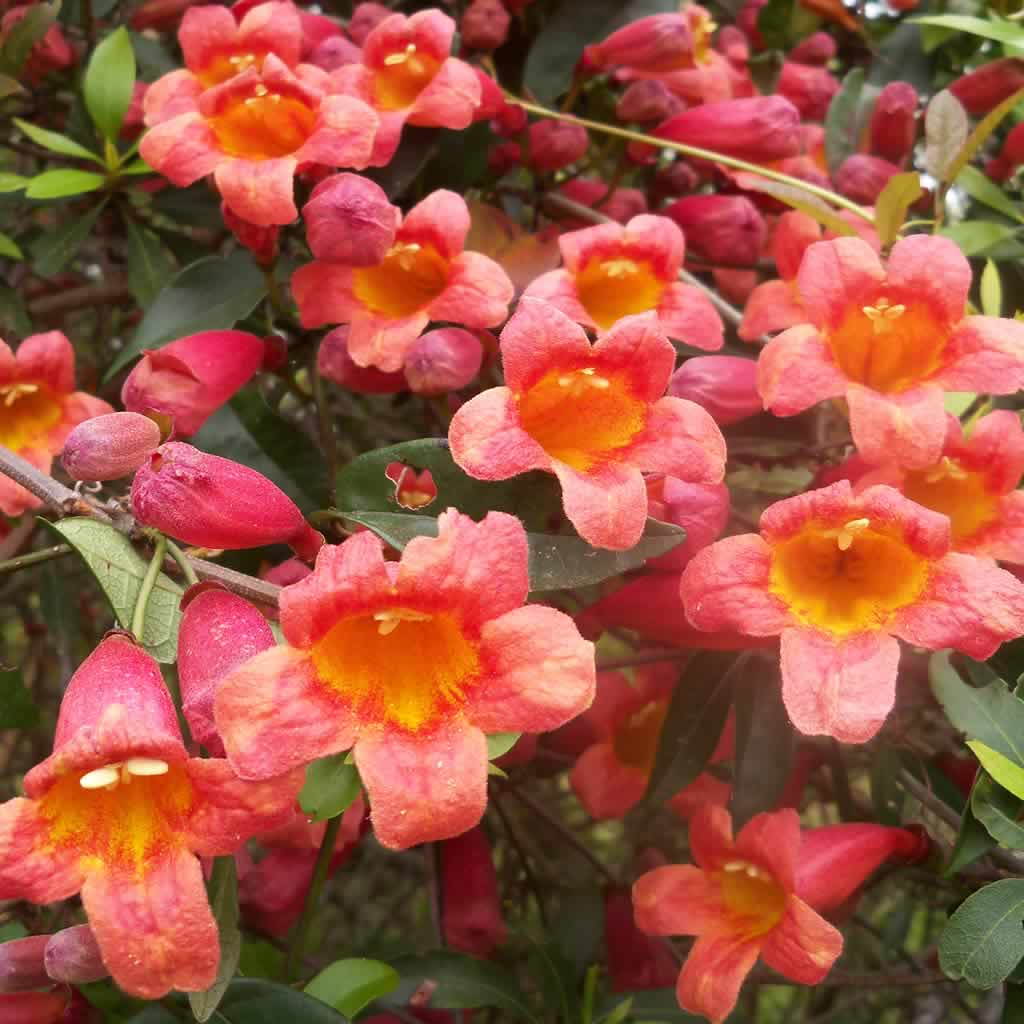
Tangerine Beauty Crossvine is the perfect native vine for covering large fences, arbors, and pergolas. Its trumpet-shaped flowers open in the spring to coincide with the ruby-throated hummingbird migration.
- Very showy in bloom
- Easy to grow and tough
- Hummingbird and bumblebee favorite
Details
- 20 to 40 ft. or more in southern areas
- In the North, plants are more restrained and grow 10 to 20 ft.
- Self-clings to bricks, concrete, and wood
- In the south, leaves are evergreen and turn purple in the fall, remaining attractive throughout the winter.
- Hardy in USDA hardiness zones 6, 7, 8, and 9
Flowering period
In central North Carolina, plants start blooming in late April and last around three weeks. Occasionally, there is a second, lighter flush of flowers in late summer.
How to grow
Crossvine grows fastest in moist soil, but is very adaptable and will tolerate drought and flooding once established. Either all-day sun or morning shade and afternoon sun will produce the most flowers.
Care and maintenance
Tie stems to the support until they start to cling. Overgrown plants can be pruned after flowering in spring to avoid losing next year’s flowers.
Where to Plant
Up large arbors, pergolas, and along wooden fences. Crossvine looks stunning when cascading over chain-linked fences.
When to plant
In the South, plants can be planted anytime the ground is not frozen. Gardeners further north should plant in spring through mid-summer to get plants established before winter.
Spacing
Mature vines (4 to 5 years old) can cover between 100 to 200 square feet of space.
When will my plant flower?
Plants purchased in early spring will be in bud or flower while plants purchased after mid-spring will flower the following year.
Native habitat and range
In the wild, Bignonia caperolata grows in swamp forests and moist woods from Maryland and southern Ohio down into central Florida and eastern Texas.
Source and origin
Tangerine Beauty is a wild form of crossvine selected over 60 years ago for its heavy flowering and stunning tangerine-colored flowers. Plants are propagated from cuttings at the nursery.
Tangerine Beauty Crossvine is the perfect native vine for covering large fences, arbors, and pergolas. Its trumpet-shaped flowers open in the spring to coincide with the ruby-throated hummingbird migration.
- Very showy in bloom
- Easy to grow and tough
- Hummingbird and bumblebee favorite
Details
- 20 to 40 ft. or more in southern areas
- In the North, plants are more restrained and grow 10 to 20 ft.
- Self-clings to bricks, concrete, and wood
- In the south, leaves are evergreen and turn purple in the fall, remaining attractive throughout the winter.
- Hardy in USDA hardiness zones 6, 7, 8, and 9
Flowering period
In central North Carolina, plants start blooming in late April and last around three weeks. Occasionally, there is a second, lighter flush of flowers in late summer.
How to grow
Crossvine grows fastest in moist soil, but is very adaptable and will tolerate drought and flooding once established. Either all-day sun or morning shade and afternoon sun will produce the most flowers.
Care and maintenance
Tie stems to the support until they start to cling. Overgrown plants can be pruned after flowering in spring to avoid losing next year’s flowers.
Where to Plant
Up large arbors, pergolas, and along wooden fences. Crossvine looks stunning when cascading over chain-linked fences.
When to plant
In the South, plants can be planted anytime the ground is not frozen. Gardeners further north should plant in spring through mid-summer to get plants established before winter.
Spacing
Mature vines (4 to 5 years old) can cover between 100 to 200 square feet of space.
When will my plant flower?
Plants purchased in early spring will be in bud or flower while plants purchased after mid-spring will flower the following year.
Native habitat and range
In the wild, Bignonia caperolata grows in swamp forests and moist woods from Maryland and southern Ohio down into central Florida and eastern Texas.
Source and origin
Tangerine Beauty is a wild form of crossvine selected over 60 years ago for its heavy flowering and stunning tangerine-colored flowers. Plants are propagated from cuttings at the nursery.
Original: $24.00
-70%$24.00
$7.20Description
Tangerine Beauty Crossvine is the perfect native vine for covering large fences, arbors, and pergolas. Its trumpet-shaped flowers open in the spring to coincide with the ruby-throated hummingbird migration.
- Very showy in bloom
- Easy to grow and tough
- Hummingbird and bumblebee favorite
Details
- 20 to 40 ft. or more in southern areas
- In the North, plants are more restrained and grow 10 to 20 ft.
- Self-clings to bricks, concrete, and wood
- In the south, leaves are evergreen and turn purple in the fall, remaining attractive throughout the winter.
- Hardy in USDA hardiness zones 6, 7, 8, and 9
Flowering period
In central North Carolina, plants start blooming in late April and last around three weeks. Occasionally, there is a second, lighter flush of flowers in late summer.
How to grow
Crossvine grows fastest in moist soil, but is very adaptable and will tolerate drought and flooding once established. Either all-day sun or morning shade and afternoon sun will produce the most flowers.
Care and maintenance
Tie stems to the support until they start to cling. Overgrown plants can be pruned after flowering in spring to avoid losing next year’s flowers.
Where to Plant
Up large arbors, pergolas, and along wooden fences. Crossvine looks stunning when cascading over chain-linked fences.
When to plant
In the South, plants can be planted anytime the ground is not frozen. Gardeners further north should plant in spring through mid-summer to get plants established before winter.
Spacing
Mature vines (4 to 5 years old) can cover between 100 to 200 square feet of space.
When will my plant flower?
Plants purchased in early spring will be in bud or flower while plants purchased after mid-spring will flower the following year.
Native habitat and range
In the wild, Bignonia caperolata grows in swamp forests and moist woods from Maryland and southern Ohio down into central Florida and eastern Texas.
Source and origin
Tangerine Beauty is a wild form of crossvine selected over 60 years ago for its heavy flowering and stunning tangerine-colored flowers. Plants are propagated from cuttings at the nursery.