Scarlet Rosemallow
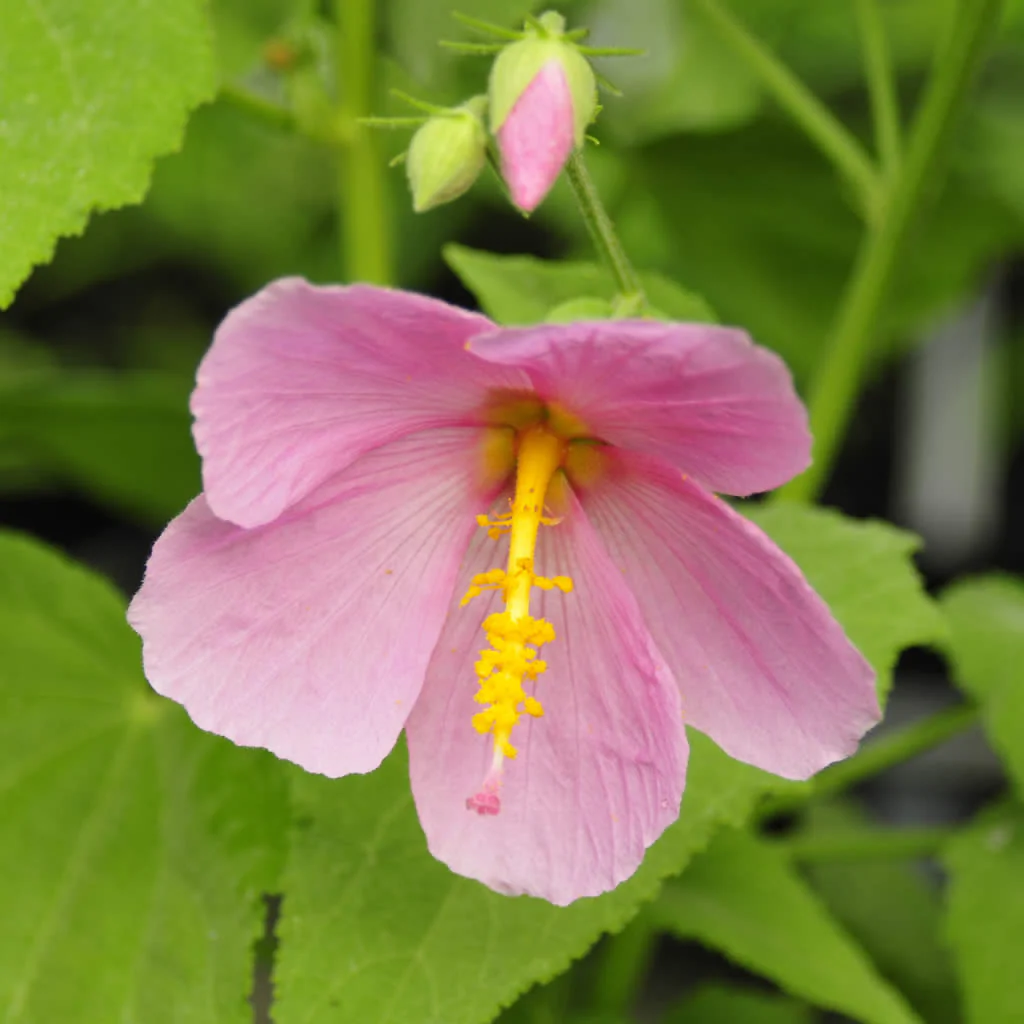
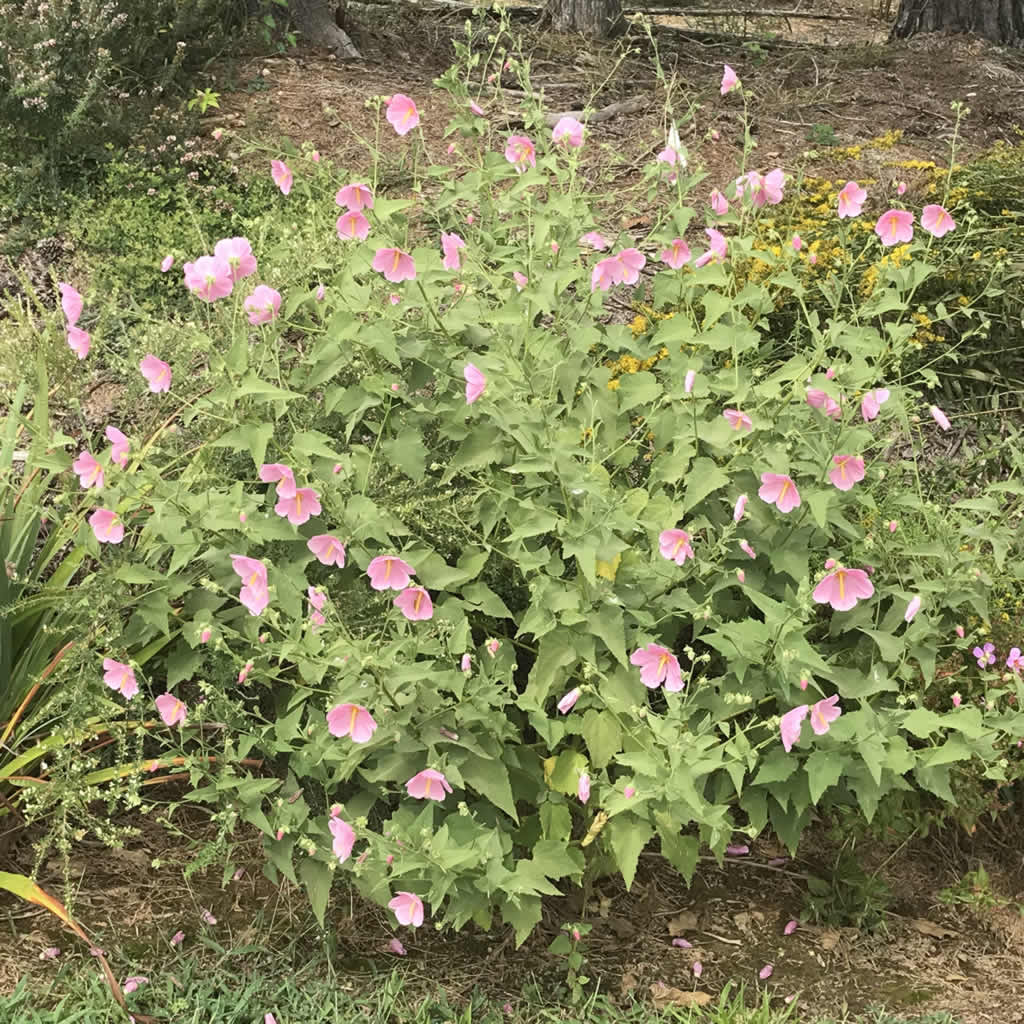
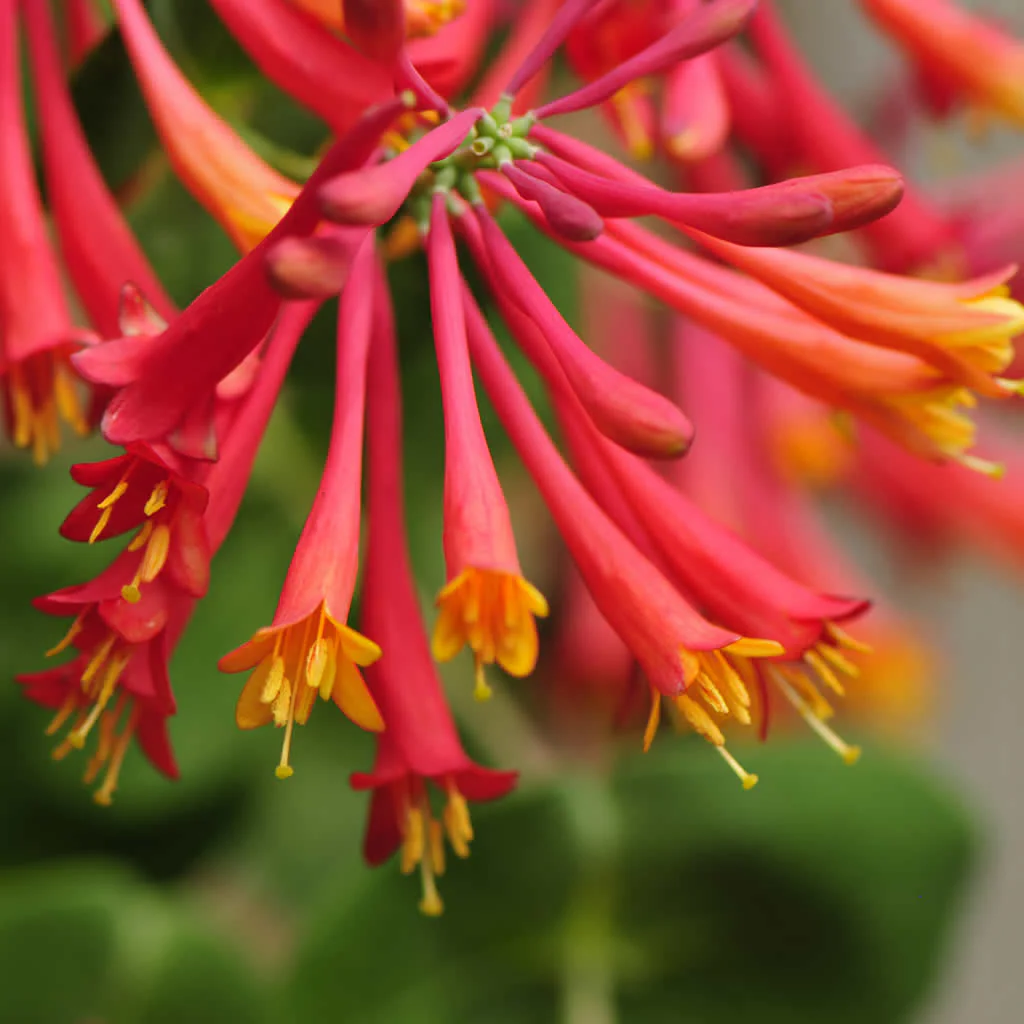
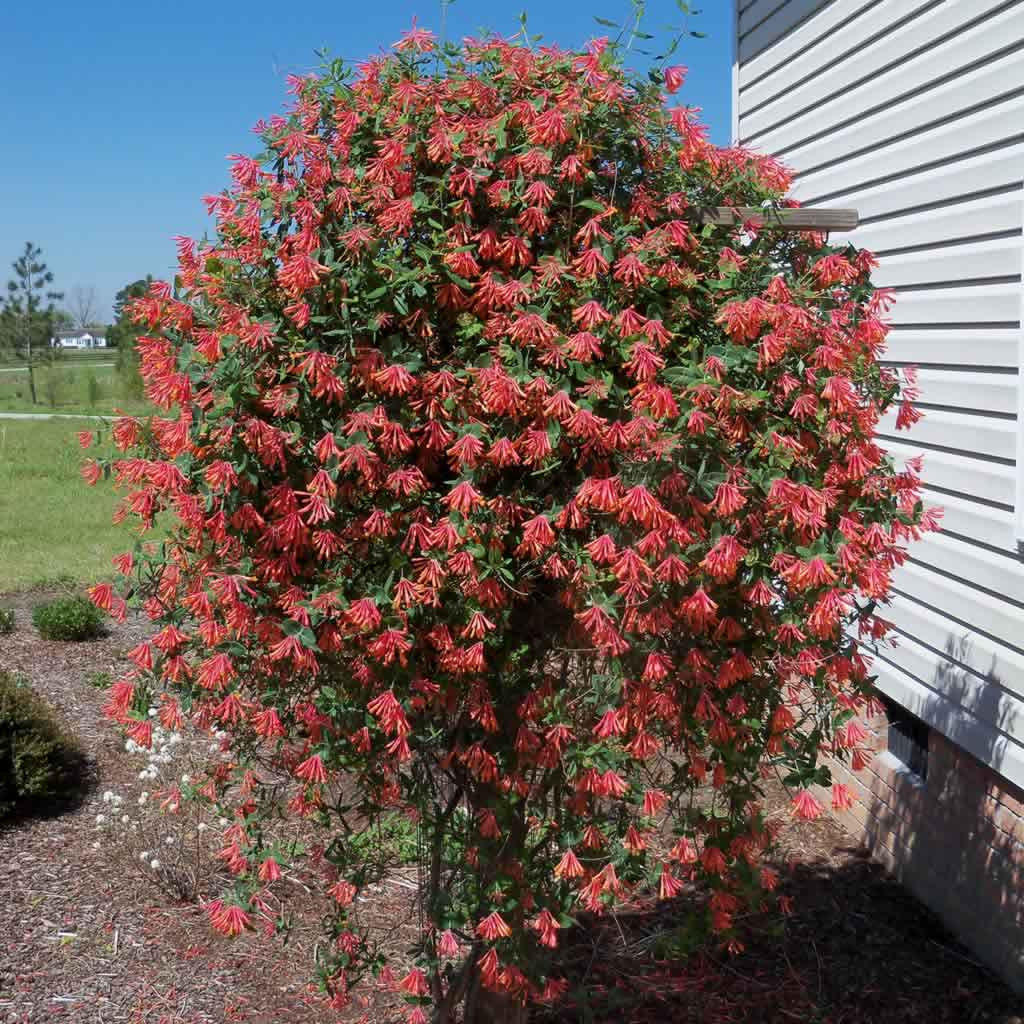
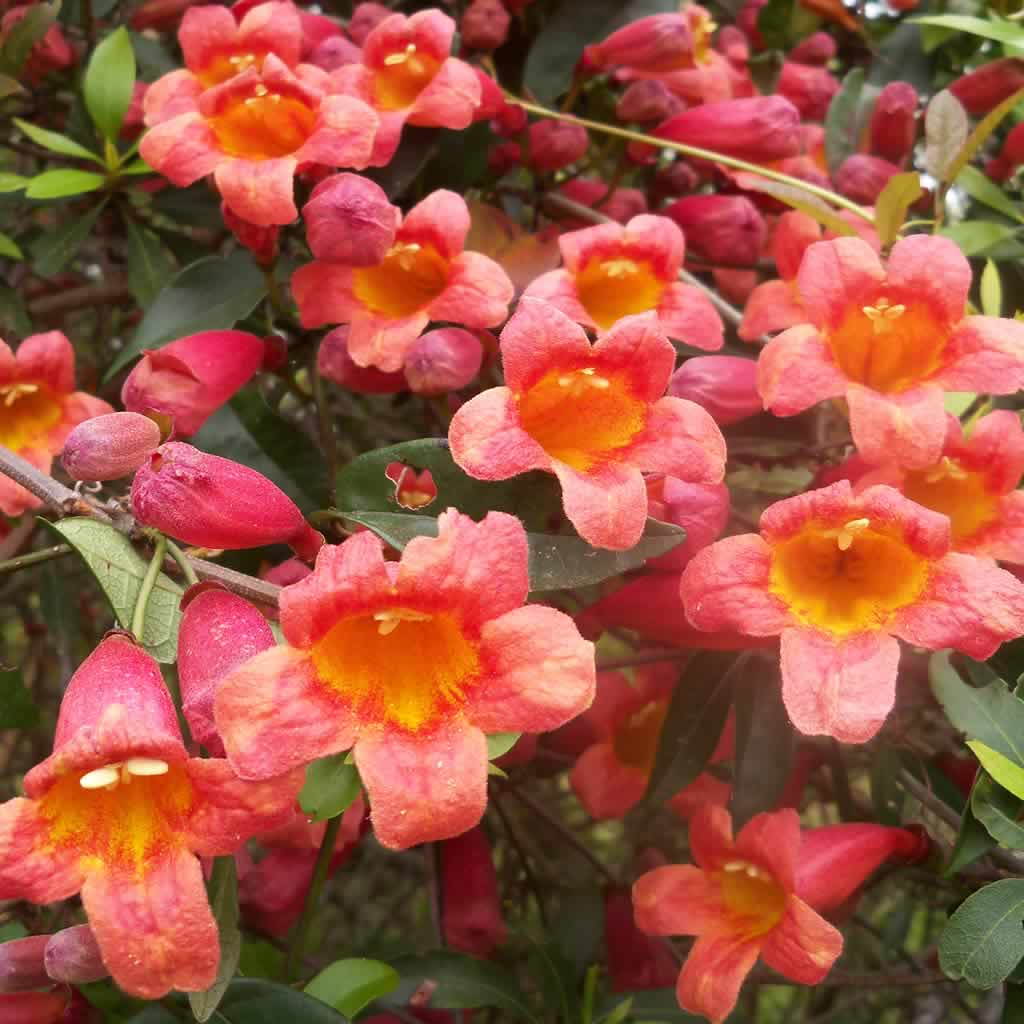
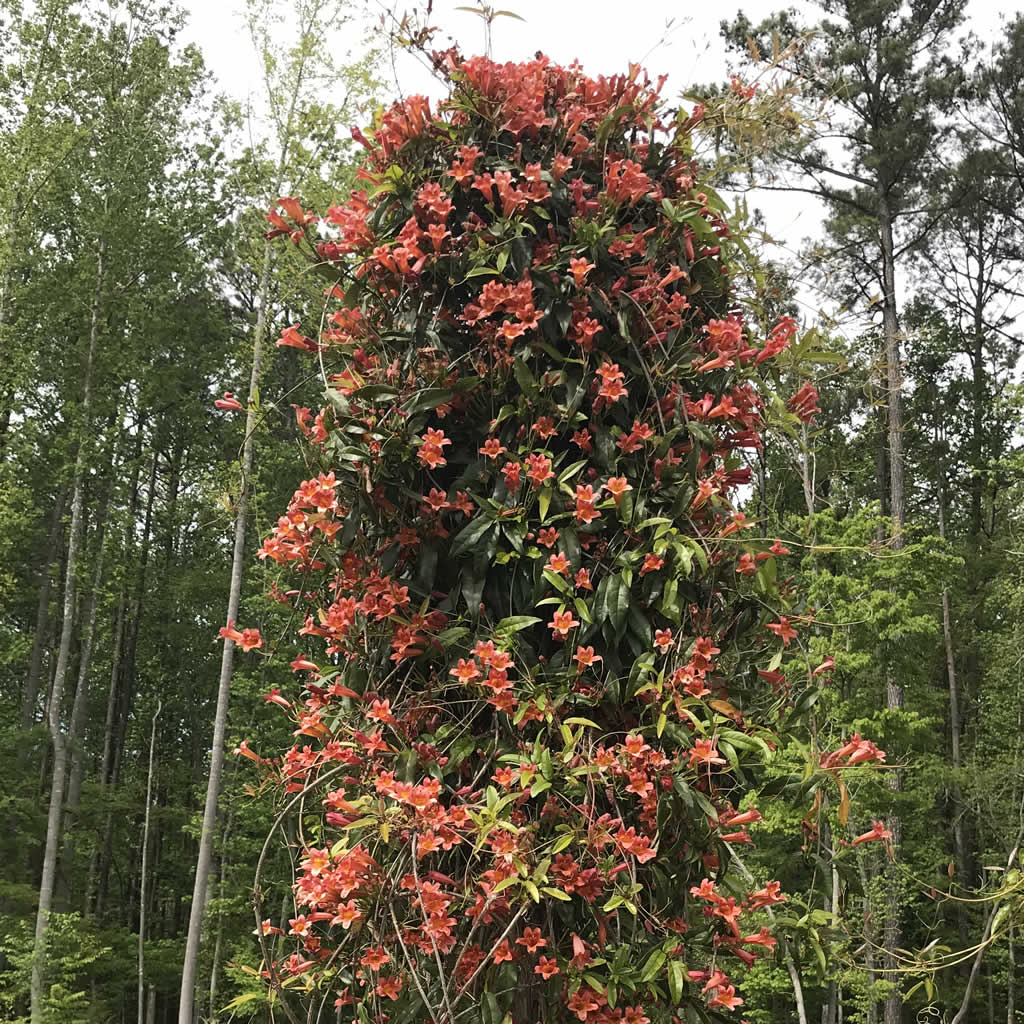
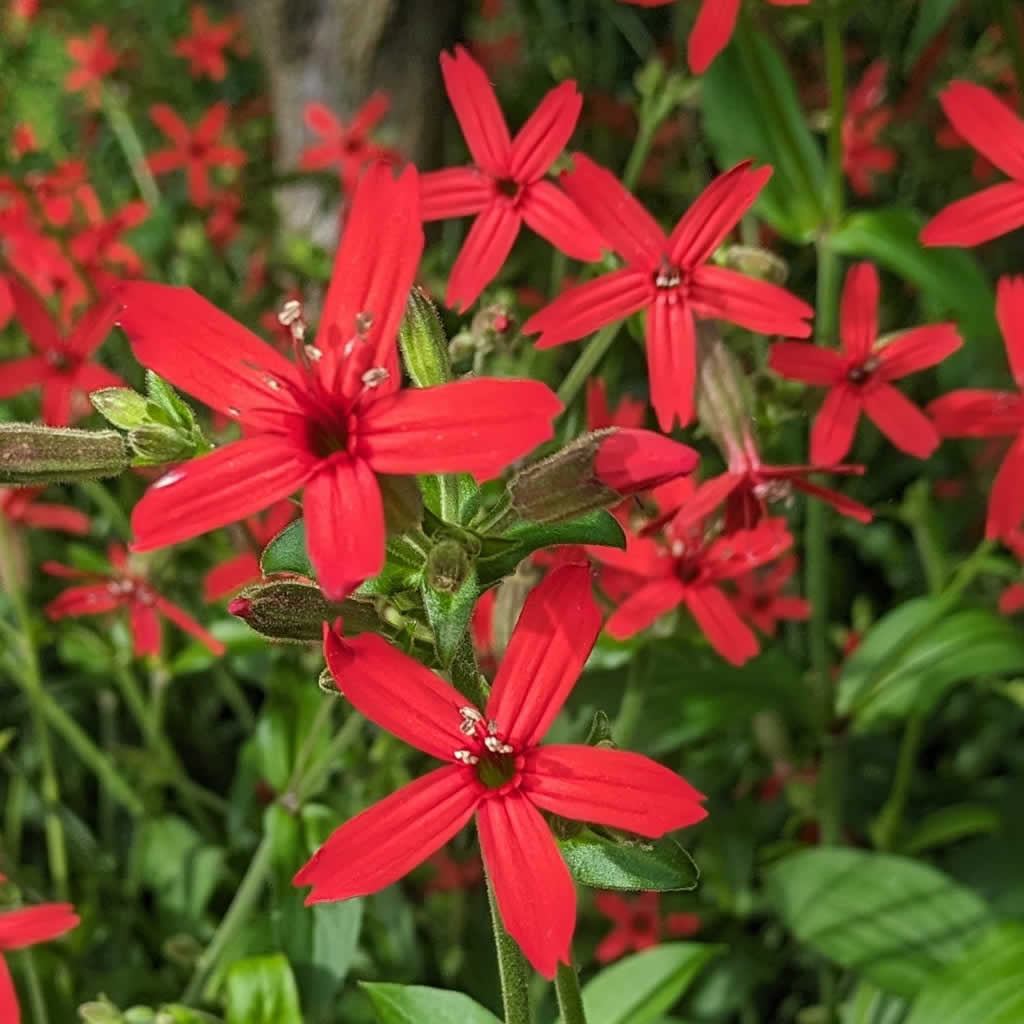
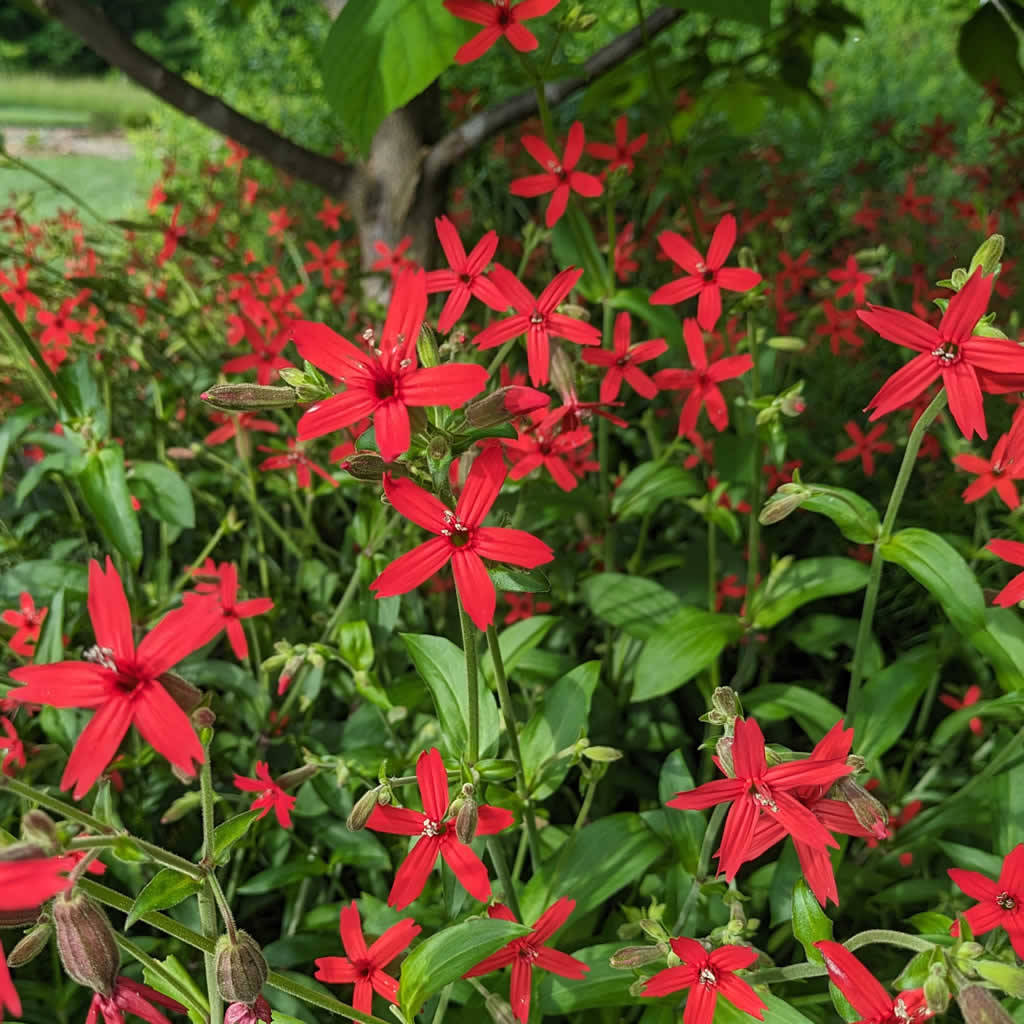
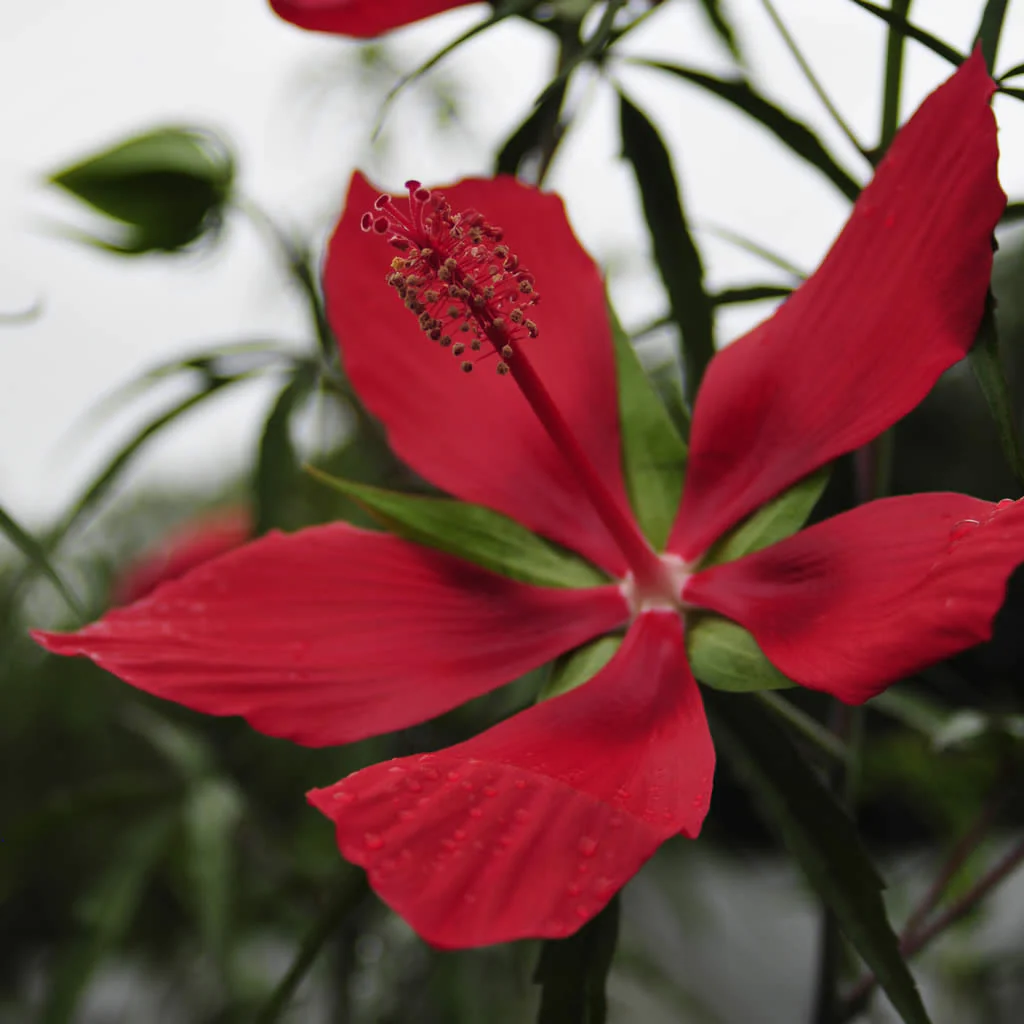
Hibiscus coccineus or scarlet rosemallow has large crimson flowers and leaves very similar to Marijuana (Cannabis), which can easily confuse curious onlookers.
- Flowers attract hummingbirds
- Thrives in wet soil
- Easy to grow
Details
- 5 to 8 feet tall and wide
- Fast-growing and long-lived perennial
- Plants lose their leaves and go dormant in the fall
- New growth emerges in mid-spring from a thick woody rootstock
- Hardy in USDA hardiness zones 6, 7, 8, 9, and 10
Flowering period
In central North Carolina, flowering starts in late July and can continue into October.
How to grow
For strong growth and plenty of flowers, give scarlet rosemallow full sun and grow in fertile, moist soil. In drier sites, add organic matter and water during dry spells. Will tolerate periodic drought in heavier soil.
Care and maintenance
Keep watered to promote a strong root system while plants get established. Cut the thick woody stems down to ground level before growth begins in spring.
Where to plant
Plant at the edges of ponds and in ditches, rain gardens, and flower beds.
When to plant
In the South, plant scarlet rosemallow anytime throughout the growing season. It grows fastest during the hot, long days of summer. In northern areas plant in the spring or early summer to get plants established before winter.
When will my plant flower?
When planted before June, they will bloom their first year if planted in a fertile, well-prepared site and kept watered.
Native habitat and range
Marshes, swamp forests, and roadside ditches. Southeast North Carolina (where it may have been introduced) south into Florida and across to Alabama.
Source and Origin
Plants were grown from seed collected along the edge on a swamp forest in Brunswick County, North Carolina.
Hibiscus coccineus or scarlet rosemallow has large crimson flowers and leaves very similar to Marijuana (Cannabis), which can easily confuse curious onlookers.
- Flowers attract hummingbirds
- Thrives in wet soil
- Easy to grow
Details
- 5 to 8 feet tall and wide
- Fast-growing and long-lived perennial
- Plants lose their leaves and go dormant in the fall
- New growth emerges in mid-spring from a thick woody rootstock
- Hardy in USDA hardiness zones 6, 7, 8, 9, and 10
Flowering period
In central North Carolina, flowering starts in late July and can continue into October.
How to grow
For strong growth and plenty of flowers, give scarlet rosemallow full sun and grow in fertile, moist soil. In drier sites, add organic matter and water during dry spells. Will tolerate periodic drought in heavier soil.
Care and maintenance
Keep watered to promote a strong root system while plants get established. Cut the thick woody stems down to ground level before growth begins in spring.
Where to plant
Plant at the edges of ponds and in ditches, rain gardens, and flower beds.
When to plant
In the South, plant scarlet rosemallow anytime throughout the growing season. It grows fastest during the hot, long days of summer. In northern areas plant in the spring or early summer to get plants established before winter.
When will my plant flower?
When planted before June, they will bloom their first year if planted in a fertile, well-prepared site and kept watered.
Native habitat and range
Marshes, swamp forests, and roadside ditches. Southeast North Carolina (where it may have been introduced) south into Florida and across to Alabama.
Source and Origin
Plants were grown from seed collected along the edge on a swamp forest in Brunswick County, North Carolina.
Original: $16.00
-70%$16.00
$4.80Description
Hibiscus coccineus or scarlet rosemallow has large crimson flowers and leaves very similar to Marijuana (Cannabis), which can easily confuse curious onlookers.
- Flowers attract hummingbirds
- Thrives in wet soil
- Easy to grow
Details
- 5 to 8 feet tall and wide
- Fast-growing and long-lived perennial
- Plants lose their leaves and go dormant in the fall
- New growth emerges in mid-spring from a thick woody rootstock
- Hardy in USDA hardiness zones 6, 7, 8, 9, and 10
Flowering period
In central North Carolina, flowering starts in late July and can continue into October.
How to grow
For strong growth and plenty of flowers, give scarlet rosemallow full sun and grow in fertile, moist soil. In drier sites, add organic matter and water during dry spells. Will tolerate periodic drought in heavier soil.
Care and maintenance
Keep watered to promote a strong root system while plants get established. Cut the thick woody stems down to ground level before growth begins in spring.
Where to plant
Plant at the edges of ponds and in ditches, rain gardens, and flower beds.
When to plant
In the South, plant scarlet rosemallow anytime throughout the growing season. It grows fastest during the hot, long days of summer. In northern areas plant in the spring or early summer to get plants established before winter.
When will my plant flower?
When planted before June, they will bloom their first year if planted in a fertile, well-prepared site and kept watered.
Native habitat and range
Marshes, swamp forests, and roadside ditches. Southeast North Carolina (where it may have been introduced) south into Florida and across to Alabama.
Source and Origin
Plants were grown from seed collected along the edge on a swamp forest in Brunswick County, North Carolina.