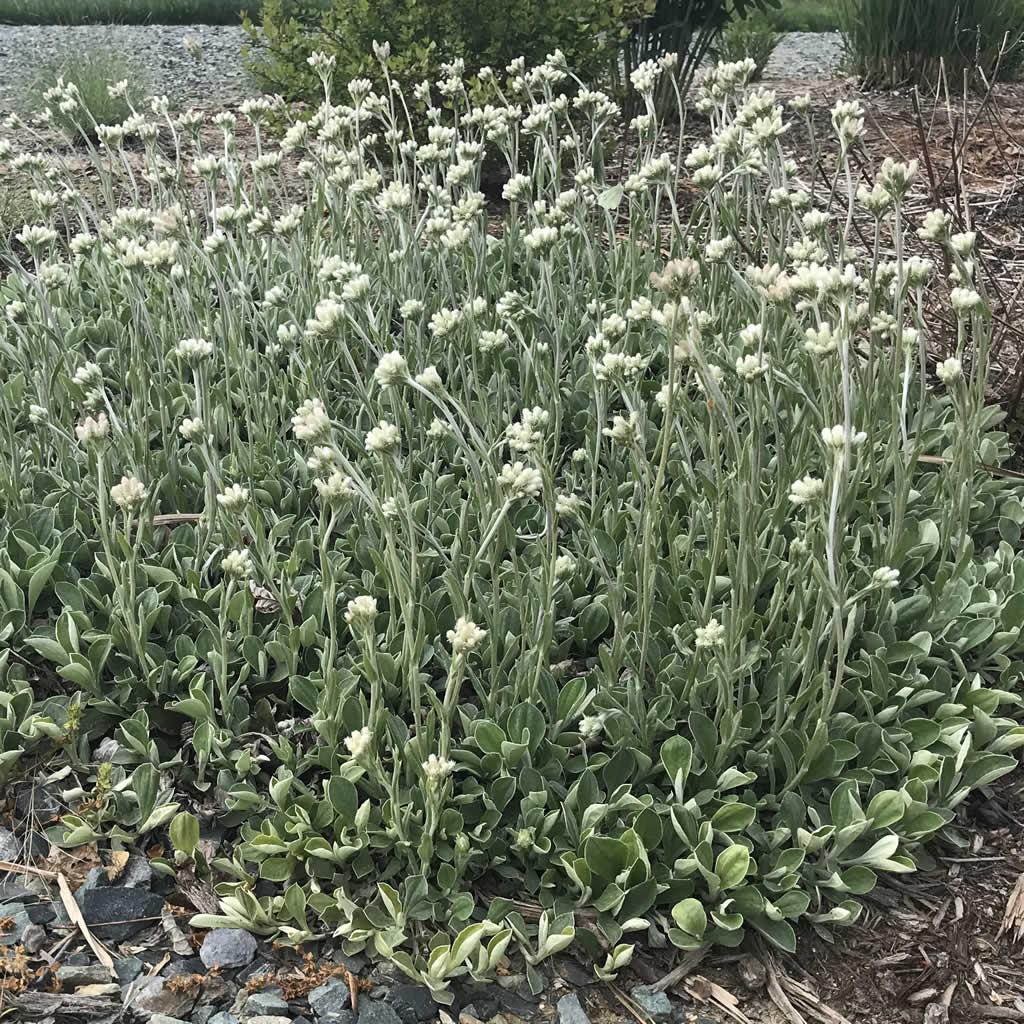
Pussytoes
Named so because its soft, felty flowers resemble the toes of a cat, pussytoes is a great wildlife plant whose flowers attract pollinators like the American painted lady butterfly, which lays its eggs on the plant’s leaves.
- Mat-forming habit with evergreen leaves
- Covers bare ground and suppresses weed growth
- Drought tolerant
Details
- 4 inches (12 inches when in flower) tall
- 12 to 48 inches wide (plants grow wider in fertile soil)
- Hardy in USDA hardiness zones 6, 7, 8, and 9
Flowering period
In central North Carolina, plants flower in mid-April.
How to grow
Pussytoes are easy to grow in most types of well-drained soil and will grow in partial shade as well as in sun.
Care and maintenance
Carefree! Though not required for the health of the plant, removing the old flowering stems (by either cutting them back by hand or running a lawnmower over them) will tidy the plant up after flowering.
Where to plant
They naturally look at home at the edge of the woods, but they also fit in at the edge of a flower bed or in front of perennials and shrubs.
When to plant
Pussytoes can be planted year-round in the South, with spring and fall being the best times for the plant and gardener.
Spacing
Around two feet apart when planting in a group.
When will my plant flower?
Plants are flowering size and will flower in the spring if purchased before March.
Native habitat and range
Antennaria plantaginifolia can be found growing along edges of dry woodland borders throughout most eastern North America.
Source and origin
Plants are grown from seeds collected at the edge of a woodland in Chatham County, NC.
Named so because its soft, felty flowers resemble the toes of a cat, pussytoes is a great wildlife plant whose flowers attract pollinators like the American painted lady butterfly, which lays its eggs on the plant’s leaves.
- Mat-forming habit with evergreen leaves
- Covers bare ground and suppresses weed growth
- Drought tolerant
Details
- 4 inches (12 inches when in flower) tall
- 12 to 48 inches wide (plants grow wider in fertile soil)
- Hardy in USDA hardiness zones 6, 7, 8, and 9
Flowering period
In central North Carolina, plants flower in mid-April.
How to grow
Pussytoes are easy to grow in most types of well-drained soil and will grow in partial shade as well as in sun.
Care and maintenance
Carefree! Though not required for the health of the plant, removing the old flowering stems (by either cutting them back by hand or running a lawnmower over them) will tidy the plant up after flowering.
Where to plant
They naturally look at home at the edge of the woods, but they also fit in at the edge of a flower bed or in front of perennials and shrubs.
When to plant
Pussytoes can be planted year-round in the South, with spring and fall being the best times for the plant and gardener.
Spacing
Around two feet apart when planting in a group.
When will my plant flower?
Plants are flowering size and will flower in the spring if purchased before March.
Native habitat and range
Antennaria plantaginifolia can be found growing along edges of dry woodland borders throughout most eastern North America.
Source and origin
Plants are grown from seeds collected at the edge of a woodland in Chatham County, NC.
Original: $15.00
-70%$15.00
$4.50Description
Named so because its soft, felty flowers resemble the toes of a cat, pussytoes is a great wildlife plant whose flowers attract pollinators like the American painted lady butterfly, which lays its eggs on the plant’s leaves.
- Mat-forming habit with evergreen leaves
- Covers bare ground and suppresses weed growth
- Drought tolerant
Details
- 4 inches (12 inches when in flower) tall
- 12 to 48 inches wide (plants grow wider in fertile soil)
- Hardy in USDA hardiness zones 6, 7, 8, and 9
Flowering period
In central North Carolina, plants flower in mid-April.
How to grow
Pussytoes are easy to grow in most types of well-drained soil and will grow in partial shade as well as in sun.
Care and maintenance
Carefree! Though not required for the health of the plant, removing the old flowering stems (by either cutting them back by hand or running a lawnmower over them) will tidy the plant up after flowering.
Where to plant
They naturally look at home at the edge of the woods, but they also fit in at the edge of a flower bed or in front of perennials and shrubs.
When to plant
Pussytoes can be planted year-round in the South, with spring and fall being the best times for the plant and gardener.
Spacing
Around two feet apart when planting in a group.
When will my plant flower?
Plants are flowering size and will flower in the spring if purchased before March.
Native habitat and range
Antennaria plantaginifolia can be found growing along edges of dry woodland borders throughout most eastern North America.
Source and origin
Plants are grown from seeds collected at the edge of a woodland in Chatham County, NC.