White False Indigo
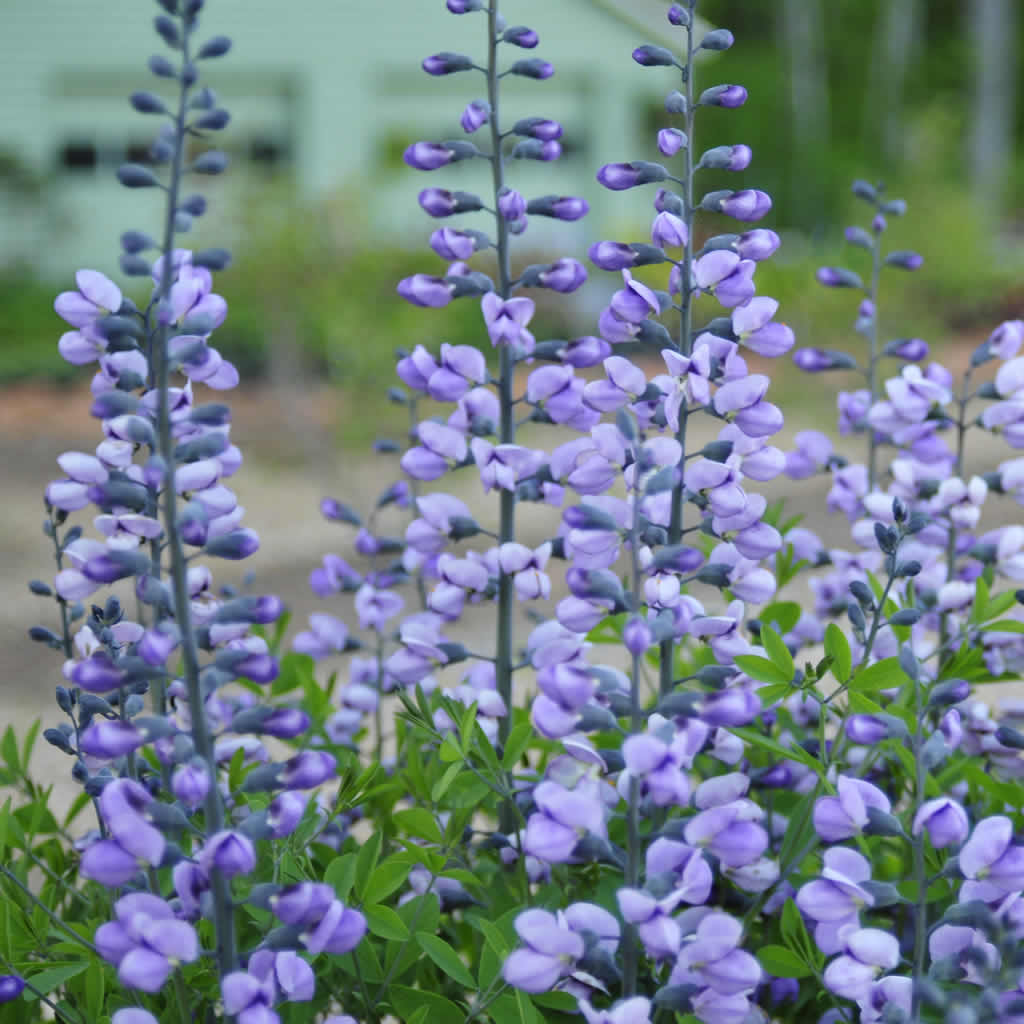
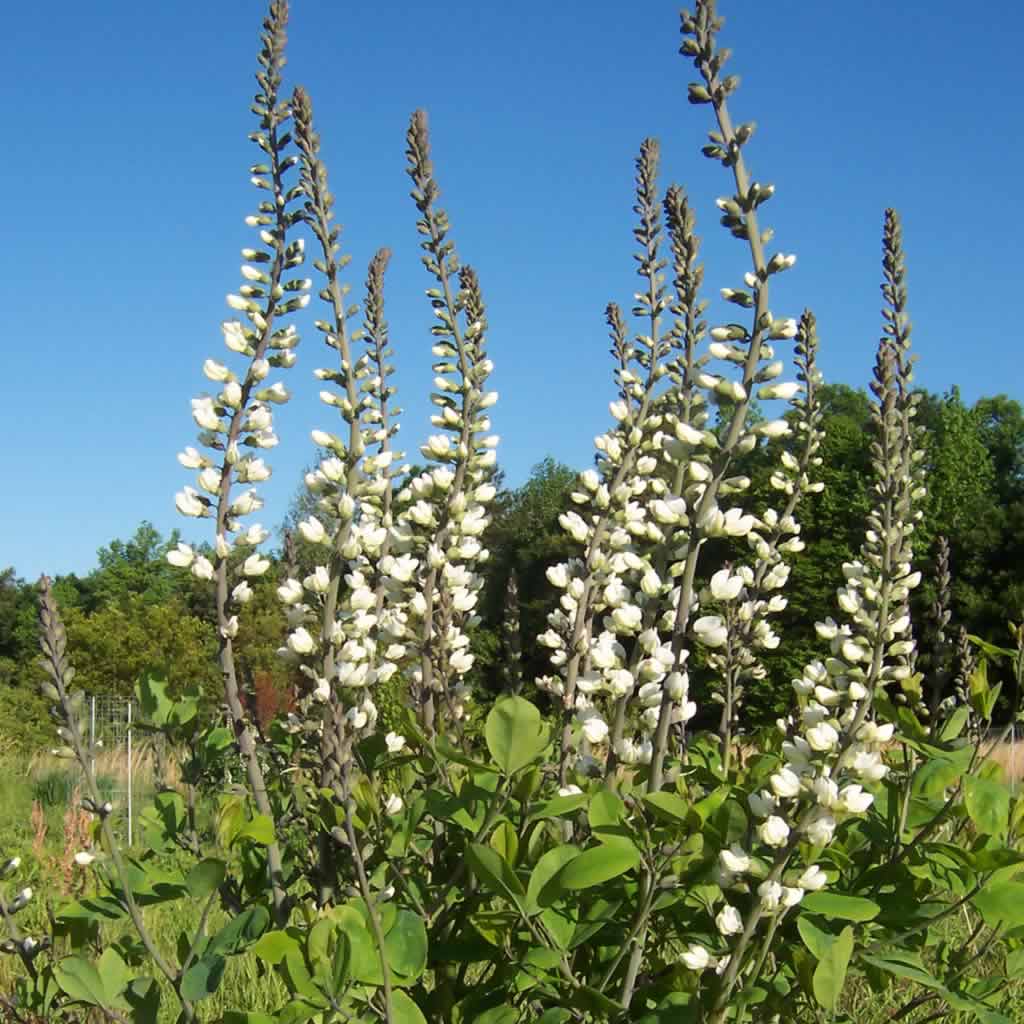
White False Indigo is a spectacular and showy native perennial. In spring, asparagus-like shoots break through the surface of the soil and in a matter of weeks open into the white flowers.
- Tough and long-lived
- Thrives in poor soil
- Deer resistant
Details
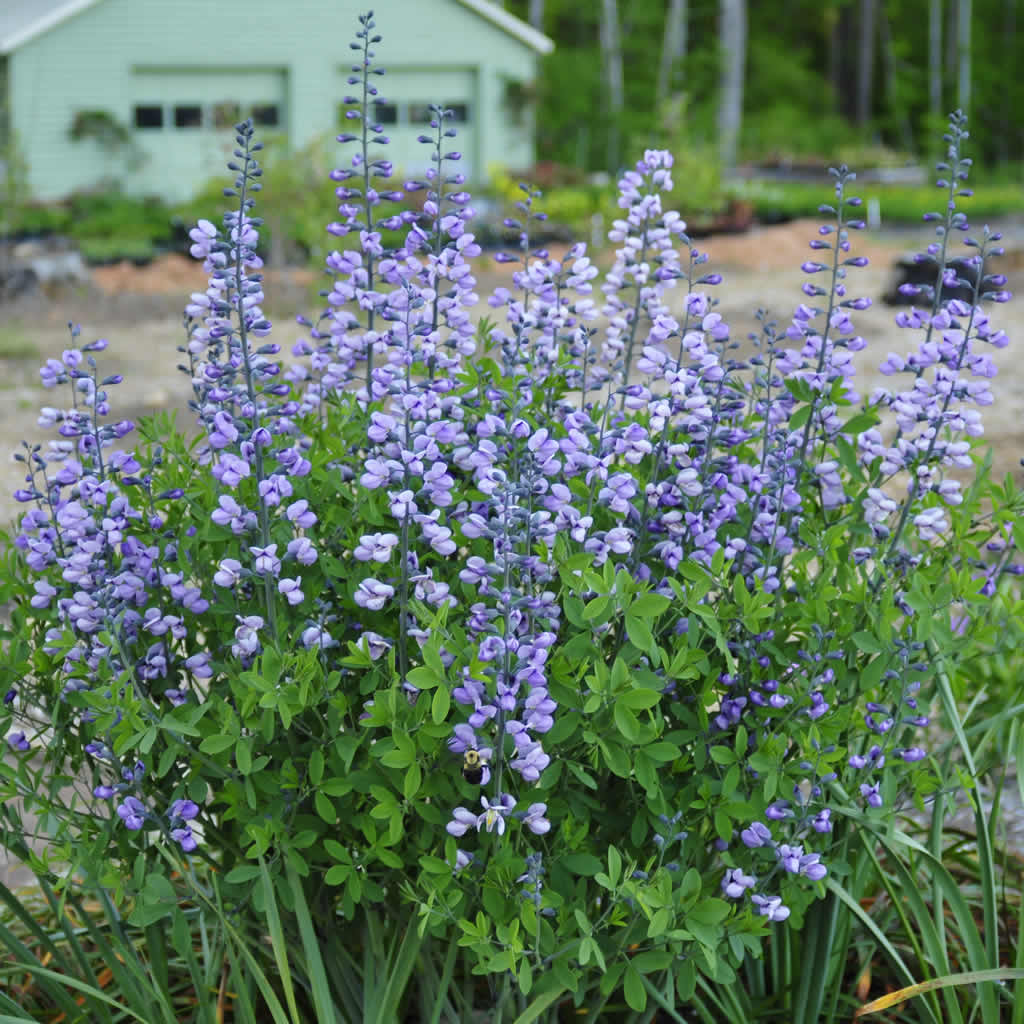
- 4-5 ft. tall and wide
- Rounded and shrub-like
- Clump-forming
- Hardy in USDA hardiness zones 5, 6, 7, 8, and 9
Flowering period
In central North Carolina, White False Indigo starts blooming at the end of April and continues for two to three weeks.
How to grow
Baptisia alba grows best in full sun and well-drained soil. Plants tend to get floppy and bloom poorly when grown in very shaded sites.
Care and maintenance
Easy to care for, just cut down old stems to the ground anytime during the winter.
Where to plant
Formal and informal gardens where it provides durability and seasonal color.
When to plant
The best time is during the growing season when plants are producing new roots.
When will my plant flower?
Flowering-size plants that will bloom their first year if purchased before mid-April.
Native habitat and range
Baptisia alba variety alba occurs at the edge of dry sandy woods from North Carolina south into Florida. It is considered rare in North Carolina.
Source and origin
Plants are grown from cuttings here at the nursery. The original plants were grown from seeds collected from a population growing in sandy soil close to the Neuse River in Wayne County, North Carolina.
White False Indigo is a spectacular and showy native perennial. In spring, asparagus-like shoots break through the surface of the soil and in a matter of weeks open into the white flowers.
- Tough and long-lived
- Thrives in poor soil
- Deer resistant
Details
- 4-5 ft. tall and wide
- Rounded and shrub-like
- Clump-forming
- Hardy in USDA hardiness zones 5, 6, 7, 8, and 9
Flowering period
In central North Carolina, White False Indigo starts blooming at the end of April and continues for two to three weeks.
How to grow
Baptisia alba grows best in full sun and well-drained soil. Plants tend to get floppy and bloom poorly when grown in very shaded sites.
Care and maintenance
Easy to care for, just cut down old stems to the ground anytime during the winter.
Where to plant
Formal and informal gardens where it provides durability and seasonal color.
When to plant
The best time is during the growing season when plants are producing new roots.
When will my plant flower?
Flowering-size plants that will bloom their first year if purchased before mid-April.
Native habitat and range
Baptisia alba variety alba occurs at the edge of dry sandy woods from North Carolina south into Florida. It is considered rare in North Carolina.
Source and origin
Plants are grown from cuttings here at the nursery. The original plants were grown from seeds collected from a population growing in sandy soil close to the Neuse River in Wayne County, North Carolina.
Original: $19.00
-70%$19.00
$5.70Description
White False Indigo is a spectacular and showy native perennial. In spring, asparagus-like shoots break through the surface of the soil and in a matter of weeks open into the white flowers.
- Tough and long-lived
- Thrives in poor soil
- Deer resistant
Details
- 4-5 ft. tall and wide
- Rounded and shrub-like
- Clump-forming
- Hardy in USDA hardiness zones 5, 6, 7, 8, and 9
Flowering period
In central North Carolina, White False Indigo starts blooming at the end of April and continues for two to three weeks.
How to grow
Baptisia alba grows best in full sun and well-drained soil. Plants tend to get floppy and bloom poorly when grown in very shaded sites.
Care and maintenance
Easy to care for, just cut down old stems to the ground anytime during the winter.
Where to plant
Formal and informal gardens where it provides durability and seasonal color.
When to plant
The best time is during the growing season when plants are producing new roots.
When will my plant flower?
Flowering-size plants that will bloom their first year if purchased before mid-April.
Native habitat and range
Baptisia alba variety alba occurs at the edge of dry sandy woods from North Carolina south into Florida. It is considered rare in North Carolina.
Source and origin
Plants are grown from cuttings here at the nursery. The original plants were grown from seeds collected from a population growing in sandy soil close to the Neuse River in Wayne County, North Carolina.