Switchgrass
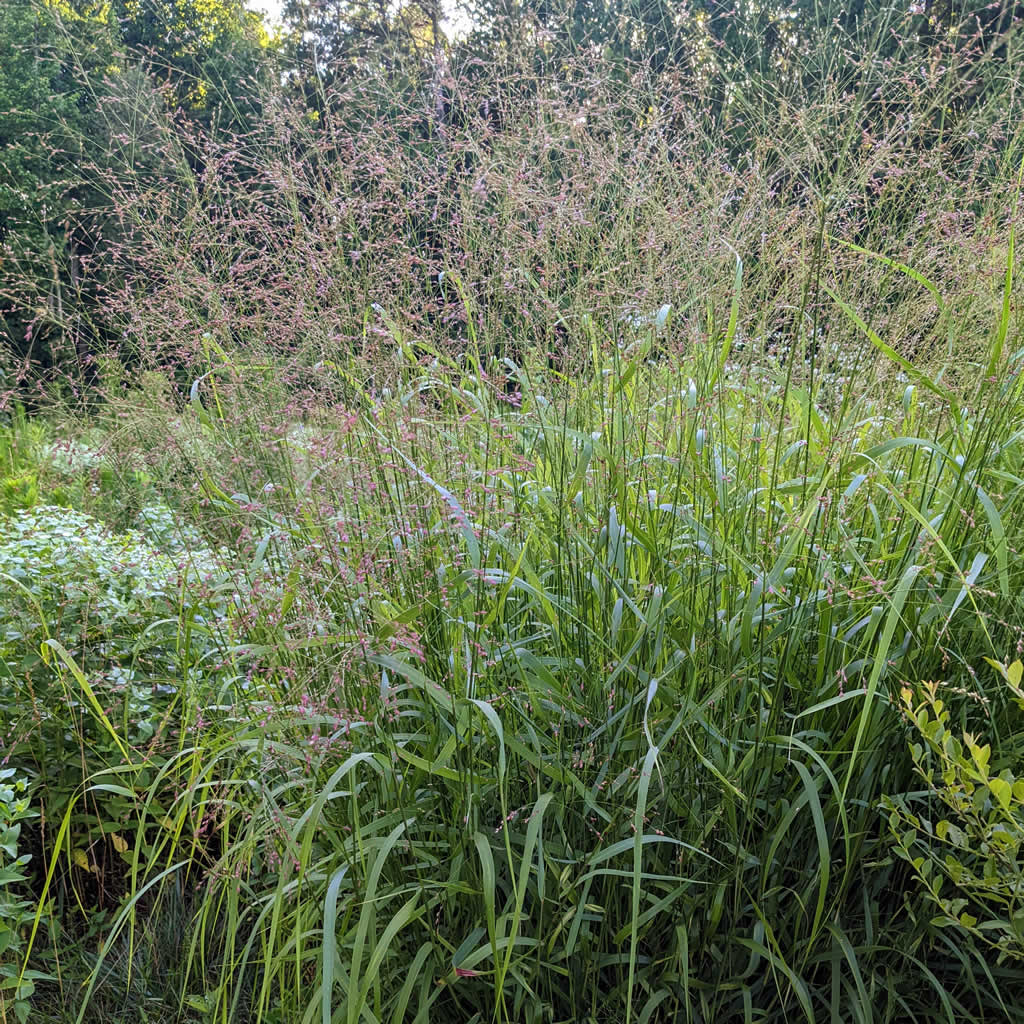
Switchgrass is a native, warm-season grass known for its tall, upright habit. Panicles of small flowers in summer are followed by attractive seed heads that provide interest and wildlife habitat well into winter.
- Easy to grow
- Leaves turn tawny-yellow in the fall
- Deer resistant
Details
- 36-48 in. tall (when in flower) and 30 in. wide
- Perennial grass that dies back in the fall and emerges again in the spring
- Hardy in USDA hardiness zones 5, 6, 7, 8, and 9
Flowering period
Flowering begins in early summer in central North Carolina and is followed by seed heads that create interest in the winter.
How to grow
Switchgrass grows best in full sun and can tolerate both dry and wet soil.
Care and maintenance
Plants can be cut back in late winter before new growth emerges.
Where to plant
The upright, linear foliage of switchgrass provides an excellent contrast to flowering perennials. Also a great choice for rain gardens, naturalizing, erosion control, and wildlife habitat. It can be planted in mass, small groups, or as a specimen.
When to plant
Switchgrass is quick to establish and can be planted any time the ground is not frozen.
Spacing
If planting in a group, space plants three feet apart.
When will my plant flower?
Nursery-grown plants should flower in early summer if planted in the spring.
Native habitat and range
Panicum virgatum grows in open and disturbed habitats in wet and dry soils throughout most of the eastern United States.
Source and origin
Our plants are propagated by root cuttings here at the nursery.
Switchgrass is a native, warm-season grass known for its tall, upright habit. Panicles of small flowers in summer are followed by attractive seed heads that provide interest and wildlife habitat well into winter.
- Easy to grow
- Leaves turn tawny-yellow in the fall
- Deer resistant
Details
- 36-48 in. tall (when in flower) and 30 in. wide
- Perennial grass that dies back in the fall and emerges again in the spring
- Hardy in USDA hardiness zones 5, 6, 7, 8, and 9
Flowering period
Flowering begins in early summer in central North Carolina and is followed by seed heads that create interest in the winter.
How to grow
Switchgrass grows best in full sun and can tolerate both dry and wet soil.
Care and maintenance
Plants can be cut back in late winter before new growth emerges.
Where to plant
The upright, linear foliage of switchgrass provides an excellent contrast to flowering perennials. Also a great choice for rain gardens, naturalizing, erosion control, and wildlife habitat. It can be planted in mass, small groups, or as a specimen.
When to plant
Switchgrass is quick to establish and can be planted any time the ground is not frozen.
Spacing
If planting in a group, space plants three feet apart.
When will my plant flower?
Nursery-grown plants should flower in early summer if planted in the spring.
Native habitat and range
Panicum virgatum grows in open and disturbed habitats in wet and dry soils throughout most of the eastern United States.
Source and origin
Our plants are propagated by root cuttings here at the nursery.
Original: $15.00
-70%$15.00
$4.50Description
Switchgrass is a native, warm-season grass known for its tall, upright habit. Panicles of small flowers in summer are followed by attractive seed heads that provide interest and wildlife habitat well into winter.
- Easy to grow
- Leaves turn tawny-yellow in the fall
- Deer resistant
Details
- 36-48 in. tall (when in flower) and 30 in. wide
- Perennial grass that dies back in the fall and emerges again in the spring
- Hardy in USDA hardiness zones 5, 6, 7, 8, and 9
Flowering period
Flowering begins in early summer in central North Carolina and is followed by seed heads that create interest in the winter.
How to grow
Switchgrass grows best in full sun and can tolerate both dry and wet soil.
Care and maintenance
Plants can be cut back in late winter before new growth emerges.
Where to plant
The upright, linear foliage of switchgrass provides an excellent contrast to flowering perennials. Also a great choice for rain gardens, naturalizing, erosion control, and wildlife habitat. It can be planted in mass, small groups, or as a specimen.
When to plant
Switchgrass is quick to establish and can be planted any time the ground is not frozen.
Spacing
If planting in a group, space plants three feet apart.
When will my plant flower?
Nursery-grown plants should flower in early summer if planted in the spring.
Native habitat and range
Panicum virgatum grows in open and disturbed habitats in wet and dry soils throughout most of the eastern United States.
Source and origin
Our plants are propagated by root cuttings here at the nursery.